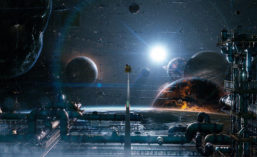
The history of the Peregeni has been a long and bloody one, particularly around the time that a new species is discovered. The history of human interaction with foreign species has been one riddled with ignorance and tragedy. To this day, humans have not developed an adequate system of interaction with newly discovered peregeni, despite best efforts and laid plans of policy makers, and instead continue to fall into the same familiar cycle of ignorance, fear, and war, followed by peace and, eventually, a modicum of understanding.
The first foreign sentient species to come into contact with humans were the Heliophites, a species of super organisms that lived in the sunny systems of what is now outer Dojian space. When humans first encountered the heliophites, they were assumed to be a particularly aggressive disease, and treated as a dangerous potential pandemic. No effort to communicate was made because it was not apparent to these early humans that the Heliophites were any more intelligent than the common cold. The heliophites themselves communicated via a complicated array of ultraviolet displays undetectable to the human eye. As such, the humans went about employing their impressive command of nano technology to wipe out the heliophites in much the same manner as they had wiped out many other bacteria-based diseases in their own territory (e.g., the common cold).
It was in this manner that the human response to their first contact with a sentient foreign species was mass xenocide. The human nanomachines were so effective in their xenocide of the heliophites that the species became extinct within just a few short years of first contact. The extinction of the heliophites was originally celebrated by the humans as a triumph over yet another potential threat to their existence. It would not be until many years later that the truth of the heliophites was learned. This was learned, in fact, only after the humans came into contact with their second foreign sentient species, the Dojians.
First contact with the dojians was only marginally more successful than with the heliophites. Similar to their experience with the heliophites, humans were completely unable to communicate with the Dojians, although unlike with the Heliophites, this was not for lack of trying. First contact with the dojians occurred in space, and as such the humans had no choice but to admit that the Dojians were both undoubtedly alien, and undoubtedly intelligent. As such, the humans at least made an initial effort to contact them.
These efforts were hindered by a number of factors, first and foremost being a vast difference in the basic anatomy of the two species. Similar to how the heliophites communicated in a manner completely unfamiliar to humans (ultraviolet displays) so, too, did the dojians (via complicated emissions of pheromones and other scents). As such, the first human attempts at communication with the dojians quite literally fell on deaf ears.
In addition to this basic difference in anatomy, attempts at communication were further complicated by the fact that the Dojians were aware of the existence of humans prior to first contact, and were not excited by the prospect of meeting them. Unbeknownst to the humans, the Dojians had actually long been in contact with the heliophites, and were not only well aware of the species’ sentience, but had learned to communicate with them. As such, the Dojians learned of human existence through the heliophites, and were all too aware of the human campaign of xenocide against the heliophites, apparently without provocation or attempt at communication.
It was therefore with a great degree of suspicion that the Dojians came into contact with humans, and were unwilling to blindly accept human diplomatic promises of peaceful intentions. This, complicated by the inherent differences in anatomy, lead to a conflict borne of ignorance. It is said that a poor choice of perfume by one of the human diplomats upon their first meeting is what lead to the war between the species.
Other first contacts with the other peregeni were no better. Pelagians communicated via very subtle electrical impulses sent through the water. Humans pinged their ships with sonar to try and understand the inner shape of their ships. The pelagians thought this was some sort of weapon and returned fire.
The Aveonares boast a sense of sight far superior to that of humans, and most of their language is conducted via extremely subtle and complicated displays of body language. In their first meeting, a human diplomat grinned and opened his palms in a sign of peace and friendship. To the Aveonares, this was an insult to their ancestral heritage. War.
The Bisontines are extremely aggressive creatures evolved from a carnivorous herd animal. They arrived to their first contact meeting with over forty diplomats. The humans arrived with five. The Bisontines saw this as a sign of weakness and saw an opportunity. War.
The Pumarians are stealthy, subtle creatures of intense spirituality centered around religious devotion to nature and the free evolution of all creatures. A human science vessel unknowingly arrived on one of their colony worlds and began tranquilizing animals and capturing them for later study. War.
And so on and so forth. Granted, much of the difficulty for humans in this arena has stemmed from that first misunderstanding with the Heliophites. Humans gained a reputation with some of the other space faring creatures for aggression and xenocide. A reputation not helped by the continued habit of misunderstanding followed by war that comes with a first contact. Nonetheless, the cycle has continued on and on with every new species, and humans are clearly at a loss for how to prevent the cycle from repeating itself. It is no wonder that humans have come to fear and resent the introduction of a new species into their universe, and human societies often view the peregeni as bad luck and omens of bad tidings.