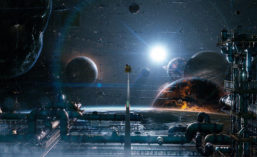
Nothin’ Wrong

Alisha was walking home late at night. She wasn’t drunk, although most people still awake at this hour were. She was coming home from work at the ER after a 24 hour shift that had tried her patience and made her more tired than she had ever thought possible before she took this job. She wore a sweater and carried a bag that many women carried, too big and full of crap she knew she didn’t need to carry around with her, but did anyway. She was lost in her thoughts as she walked, eyes half closed and staring at the ground a few feet in front of her. She yawned a couple of times, feeling the ache of her tired body drag her down, slowing her walk just slightly. She knew she was walking slower than her normal gate, and was vaguely annoyed that this meant she wasn’t going to get home as quickly. She just didn’t feel like mustering up the effort to push her legs to move faster.

She rounded the corner on her last block and pulled her bag in front of her to root around for her keys. As usual, she had trouble finding them, but that’s why she had started looking for them while she was still a good two thirds of a block away. She found her keys with about twenty feet to go before her front stoop. She looked up and then slowed to a stop a few feet from her house because she finally noticed him.

He was sitting on the steps leading up to Alisha’s front door, waiting. He wore a long black jacket with a vintage fedora that shadowed his face. As Alisha slowed to a stop he slowly and calmly stood up, took down the one step to the sidewalk and faced Alisha. He said nothing but crossed his hands in front of him, one of them was holding a knife.

“Am I gonna die?” asked Alisha softly.

“We all gotta die,” said the man.

“What have I done?” she asked, almost to herself, and genuinely confused.

“Nothin’ wrong,” he reassured her.

The front door to Alisha’s building was already open and left ajar. Sam took her by the arm, gently but firmly, and steadied her walking as he lead her inside. As she walked in, her breathing erratic and shallow, she saw her downstairs neighbors’ door left open. “Are my neighbors dead?” she asked.

“Yes.”

“Why are you doing this?” Alisha asked, genuinely curious.

“Why are you letting me?” also genuinely curious.

Alisha thought for a moment as they ascended the stairs to her apartment, “I’m not sure. I mean, I’m definitely exhibiting all the symptoms of shock, so I could use that as an excuse.”

“You don’t sound convinced.”

She frowned in irritation, “The shock is real. I can feel it, I can see my symptoms and know they are real and not imagined. But I don’t know, maybe I’m just… really, really tired.”

Sam nodded, gently saying, “Well, let’s get you in bed then.”

*  *  *

Several hours later, Sam and Harvey watched as the firefighters tried to put out the flames engulfing Alisha’s apartment building. Dojians were not capable of smiling, per se, but Sam had been with Harvey for long enough and knew his friend well enough that he was certain that Harvey was secreting a pheromone that was the Dojian equivalent of a smile. Sam was human, and therefore incapable of smelling the incredibly subtle smells that Dojian skin glands excreted to communicate a wide variety of emotional ques. Having said that, Sam was still certain the Harvey was very happy in part because he knew that Harvey enjoyed this kind of thing as much as he did, that’s what made them such great partners in all this, mutual interest in the ultimate taboo, and the thrill of the hunt.

“So,” said Sam to Harvey, “How would you grade this one?”

Harvey snorted, “Humans are such easy prey,” sang Harvey through his Dojian accent, over pronouncing the vowels in every word, “A Dojian would never have let you get close enough to use that little drug I gave you. We can, how you say, smell it a mile away. Someday I will teach you to hunt properly, and you will learn to catch a proper prey.”

Sam shook his head imperceptibly, “You just don’t appreciate the beauty of this approach. The artistry in leading someone willingly to their death. That woman was a nurse, she deals with death and delusion every day. She should have recognized the symptoms of her condition, and I even gave her the opportunity to diagnose it properly. Twice. She thought it was shock at first, a poor diagnosis. Fatigue was her second try, an even worse diagnosis. Thank God she was only a nurse, I would pity any patient of hers had she been a doctor.”

Harvey shook his head awkwardly, trying to effect the human mannerism, “Food tastes better when you have to catch it. A cow walks willingly into the slaughter house, the result is fatty and over-ripe. Take a deer on the run and you get meat full of energy, you can taste the fear. That is a true hunt. We are stuck here slaughtering cows when we could be in the wild, hunting prey that knows our scent and hears our approach. We could be living like true hunters.”

It was Sam’s turn to snort, and spit on the ground in front of him, awkwardly effecting a Dojian mannerism, “My dear Harvey, you are a barbarian. I will civilize you if it is the last thing I do with my great life. But come, it has been a long night, and we have all the time in the world to debate philosophy.”


Ben’s Back Story: The Making of a Monster

It was an old story. He was a workaholic with a perfect wife who was perfectly bored. He came home early one day to find another man having sex with his wife. Even the resulting two murders, of the wife and the other man, were part of an old and tired story. It was there, however, that the old story took a bit of a turn. But before we get to the strange turn, we must drive through the familiar, for that is the only way we can hope to understand the strange…


Ben woke up in his comfortable bed with the familiar warmth of his wife next to him. It was morning, but a weekday. The alarm had not yet made its maddening noise, but Ben’s internal clock knew that it would go off at any m-

The alarm began blaring its annoying siren with child like insistence. “Alarm off,” Ben said, “I’m awake.” Claire stirred next to him.

“Are you sure you would like to turn the alarm off? Or would you like to snooze for seven minutes?” asked his alarm in the polite, slightly arrogant tone that all electronic brains seemed to adopt.

“I’m sure,” said Ben, sitting up to show the alarm he meant it. Ben left the warmth of his bed and wandered off to the bathroom. He relieved himself, then washed his hands and splashed some water in his face. He came back into the bedroom and Claire was getting up as well, instructing the curtains to pull back and let the budding sunlight in. Ben slipped an arm around her waist and kissed her, “Good morning.”

“Good morning. Did you sleep well?” she asked.

“Like a rock. I’m going to get in the shower first, is that cool?”

“That’s fine, I’m going to make the bed then I’ll come join you.”

“Can’t wait,” he said with a smile. He gave her another kiss then walked over to the shower, already running and beginning to steam. He stepped in and began washing. A few minutes later Claire came and got in with him. They made love briefly, not having the time to fully express themselves, but enjoying it nonetheless.

Once they were both clean they climbed out of the shower, hot air blasting through the bathroom to dry them off. They each finished cleaning and getting ready for the day, then each got dressed before going down to have breakfast. Breakfast was waiting for them in the kitchen when they came down, a sensible yet tasty assortment of fresh meats and vegetables, accompanied by juice and a cup of coffee. Over breakfast they made small talk about the day’s plans.

“I may have to work late again tonight, but I should be home in time for dinner,” Ben explained, “It’s that damn Aveonare shipping venture, they want things done so quickly, but they don’t get that the Kingdom has certain protocols that must be met. I swear, it’d be easier trying to get the Pelagians to take a deep breath than the Aveonares,” Ben complained. Claire just smiled and looked at her news feed. Ben stared at her for a moment, then smiled, “what’s your plan for the day?” he finally asked.

“I think I’m going to start research on what’s necessary for that DIY project I want to do.”

“The garden reading spot? That will be nice. I still think we should build a bar for the patio, though,” Ben said with a rye smile. Claire rolled her eyes with a smile.

“You just want that so you can live out your fantasy of owning your own bar,” she chided playfully.

“Pub,” he corrected, “and what’s wrong with that? I think it would be a lot of fun. It certainly wouldn’t be boring.”

“Go to work,” she said with a smile. He grumbled, but downed the last of his coffee and grabbed his jacket.

“Alright, have a good day, I’ll see you tonight,” he said as he kissed her one last time and walked out the door.

*   *   *

Work was tedious. More tedious than usual. It had been too long since Ben had a vacation and his burnout was in full bloom. He tried to look at the documents in front of him, tried to concentrate on the memo he was composing, but the more he looked at the words in front of him the less he actually saw those words and the more he just saw… well, anything else.

He made it to lunch, stood in line for a burrito. Ate his burrito and soda then went back to work, feeling thoroughly unsatisfied. He sat down at his desk and looked at the same documents at which he had been staring for the better part of four hours before lunch. He didn’t even make it past the first sentence before he stopped, looked at the entirety of the document for a few seconds, then looked up at his desk, taking in all of the work lying on it. “Fuck it,” he said out loud, putting a few things away, grabbing his jacket and walking over to his boss’s office.

He knocked on the door then peeked in. His boss was reading a similar looking document to the one that had been plaguing Ben all morning. “Hey Boss,” he said apologetically as his boss looked up at him, “my wife just called, apparently our maintenance system is on the fritz or something, I don’t know exactly what’s going on, but something about a pipe busting and flooding the basement. Anyway, is it alright if I take the afternoon and help her fix this?”

“Oh,” his boss said with surprise, “that sounds like a terrible time. Yeah go ahead, if I need anything from you here I’ll give you a call, but you should be fine.”

“Thanks, I really appreciate this,” Ben said sincerely.

“It’s fine, just let me know how it goes.”

“Will do,” Ben said, giving the wall a tap and getting out of there before more questions could be asked.

*  *  *

Ben walked up to his front door feeling great. It was so nice to not be at work, and when the sun was still up in the sky, no less. He couldn’t wait to grab Claire, give her a kiss and then jump in the car and go somewhere. He wasn’t sure where, yet, he had a few ideas, each just a little crazier than the last. Maybe they would go into the city and catch a show, maybe they would just wander around and do stupid touristy stuff and eat street food, maybe the city was too pedestrian, maybe they could hope a shuttle and head off to-

There was a noise. One, brief little noise like a wounded cat landing on the floor with a whimper. They didn’t own a cat though, and Ben’s heart thumped. One, brief little pump of his heart that felt like a punch to his throat. Somehow in that heart pump he knew that the noise was Claire, and the noise was wrong. It was wrong like a surprise new piece of furniture in your living room, like someone had stolen your pillow off your bed. Ben knew the noises in his home, the normal ones made by his wife or the house itself, and this noise was wrong.

Ben dropped his jacket and quietly came up to his front door, listening for more. He put his hand on the door handle, it immediately recognizing his hand print and unlocked the door. With the door half open he heard another, short gasp. It came from the kitchen. Ben quietly moved in that direction, his heart now pounding steady as he began to numbly recognize the sound of panting, and then another gasp for air. The gasp and the panting overlapped, and he realized there were two people in the kitchen. He recognized the gasping as his wife’s, he had heard it so many times before, memories poisonously, sickeningly sweet right now.

He rounded the corner to the kitchen and saw his greatest fear. They were facing away from Ben, her shirt still on but pants at her ankles, he dressed the same. She was bent over the kitchen table as his bare ass was pumping away. She was barely moving, forehead against the table top, he was pushing her down onto the table with one arm and holding onto the table for stability with the other. For a shockingly long time, what seemed like days, months, ages, Ben stood in the doorway and did nothing, watching them in pure shock.

Now pay attention because this is where things turn. The police didn’t see the turn for the strange because they were too shocked by the spectacle of the result. The judge didn’t see it either, nor did the reporters. They all saw the same thing, the familiar story mixed with the horror of the scene, and they clung to the familiar to help them deal with the horror. Ben didn’t even see it, not at first.

As Ben stood there, watching in shocked disbelief, his brain began to reject the horror of what his eyes were reporting. His vision began to blur, but he dared not blink. Instead, he began losing sight of the two half naked bodies pumping away in his kitchen, and instead began to see nothing but a clean, unblemished sheet of red descend over his vision. It didn’t drop from top to bottom like a stage curtain, but rather coalesced around the edges of his vision, and closed around the center of his sight, leaving the man’s naked ass as the last thing he saw.

It was a long time before Ben saw anything but that red sheet. He didn’t hear anything either. He didn’t hear himself give a low sickening howl, like a rabid wolf. He didn’t see himself walk quickly up to the man as he turned from Claire. Ben didn’t see the man crumble under his blows as he pounded mercilessly. He didn’t see Claire look up from the table top to see Ben on top of the half naked man, beating him. Ben didn’t see Claire look at him and smile, whispering “You seem so surprised.”

Ben didn’t see himself turn from the bloody hulk that used to be the half naked man and look at his half naked wife, standing there. He didn’t see her smile slowly disappear as she saw his rage-blind eyes. He didn’t see her own eyes turn to fear as he stood and began walking towards her. He couldn’t watch himself hit her, he couldn’t watch himself tear at her or hear her scream in fear and pain.

Ben saw and heard none of this. He came out of it all what must have been hours later, sitting in a sticky, bloody heap on the floor of his kitchen, congealed blood everywhere. In the end the bodies were barely recognizable as human, let alone as the individuals they used to be. Ben didn’t know what happened, so he let people fill in the blanks for him. It would not be for a long time that he learned the truth of it, and by then, well, it was too late.

The Peregeni, a Brief History

The history of the Peregeni has been a long and bloody one, particularly around the time that a new species is discovered. The history of human interaction with foreign species has been one riddled with ignorance and tragedy. To this day, humans have not developed an adequate system of interaction with newly discovered peregeni, despite best efforts and laid plans of policy makers, and instead continue to fall into the same familiar cycle of ignorance, fear, and war, followed by peace and, eventually, a modicum of understanding.

The first foreign sentient species to come into contact with humans were the Heliophites, a species of super organisms that lived in the sunny systems of what is now outer Dojian space. When humans first encountered the heliophites, they were assumed to be a particularly aggressive disease, and treated as a dangerous potential pandemic. No effort to communicate was made because it was not apparent to these early humans that the Heliophites were any more intelligent than the common cold. The heliophites themselves communicated via a complicated array of ultraviolet displays undetectable to the human eye. As such, the humans went about employing their impressive command of nano technology to wipe out the heliophites in much the same manner as they had wiped out many other bacteria-based diseases in their own territory (e.g., the common cold).

It was in this manner that the human response to their first contact with a sentient foreign species was mass xenocide. The human nanomachines were so effective in their xenocide of the heliophites that the species became extinct within just a few short years of first contact. The extinction of the heliophites was originally celebrated by the humans as a triumph over yet another potential threat to their existence. It would not be until many years later that the truth of the heliophites was learned. This was learned, in fact, only after the humans came into contact with their second foreign sentient species, the Dojians.

First contact with the dojians was only marginally more successful than with the heliophites. Similar to their experience with the heliophites, humans were completely unable to communicate with the Dojians, although unlike with the Heliophites, this was not for lack of trying. First contact with the dojians occurred in space, and as such the humans had no choice but to admit that the Dojians were both undoubtedly alien, and undoubtedly intelligent. As such, the humans at least made an initial effort to contact them.

These efforts were hindered by a number of factors, first and foremost being a vast difference in the basic anatomy of the two species. Similar to how the heliophites communicated in a manner completely unfamiliar to humans (ultraviolet displays) so, too, did the dojians (via complicated emissions of pheromones and other scents). As such, the first human attempts at communication with the dojians quite literally fell on deaf ears.

In addition to this basic difference in anatomy, attempts at communication were further complicated by the fact that the Dojians were aware of the existence of humans prior to first contact, and were not excited by the prospect of meeting them. Unbeknownst to the humans, the Dojians had actually long been in contact with the heliophites, and were not only well aware of the species’ sentience, but had learned to communicate with them. As such, the Dojians learned of human existence through the heliophites, and were all too aware of the human campaign of xenocide against the heliophites, apparently without provocation or attempt at communication.

It was therefore with a great degree of suspicion that the Dojians came into contact with humans, and were unwilling to blindly accept human diplomatic promises of peaceful intentions. This, complicated by the inherent differences in anatomy, lead to a conflict borne of ignorance. It is said that a poor choice of perfume by one of the human diplomats upon their first meeting is what lead to the war between the species.

Other first contacts with the other peregeni were no better. Pelagians communicated via very subtle electrical impulses sent through the water. Humans pinged their ships with sonar to try and understand the inner shape of their ships. The pelagians thought this was some sort of weapon and returned fire.

The Aveonares boast a sense of sight far superior to that of humans, and most of their language is conducted via extremely subtle and complicated displays of body language. In their first meeting, a human diplomat grinned and opened his palms in a sign of peace and friendship. To the Aveonares, this was an insult to their ancestral heritage. War.

The Bisontines are extremely aggressive creatures evolved from a carnivorous herd animal. They arrived to their first contact meeting with over forty diplomats. The humans arrived with five. The Bisontines saw this as a sign of weakness and saw an opportunity. War.

The Pumarians are stealthy, subtle creatures of intense spirituality centered around religious devotion to nature and the free evolution of all creatures. A human science vessel unknowingly arrived on one of their colony worlds and began tranquilizing animals and capturing them for later study. War.

And so on and so forth. Granted, much of the difficulty for humans in this arena has stemmed from that first misunderstanding with the Heliophites. Humans gained a reputation with some of the other space faring creatures for aggression and xenocide. A reputation not helped by the continued habit of misunderstanding followed by war that comes with a first contact. Nonetheless, the cycle has continued on and on with every new species, and humans are clearly at a loss for how to prevent the cycle from repeating itself. It is no wonder that humans have come to fear and resent the introduction of a new species into their universe, and human societies often view the peregeni as bad luck and omens of bad tidings.

The Seal of the Confessional

Jim was in the galley. It was late, most of the crew had gone to quarters for sleep, which is what Jim would do in just a few moments, he just needed to finish up cleaning. It had been a relatively quiet night. It was early in the week, and the crew hadn’t quite built up the steam to need to blow any of it off yet. Plus, the closer they got to Kingdom territory, the more solemn and on edge the crew became.

Jim was methodically scrubbing the flat top grill when he heard a light knock on the doorway to the galley. He turned to see a thin Dojian standing in the doorway, four padded feet and a tail dragging on the ground, shoulders slouched, and his eyes only half open, nestled between his elongated nostrils that ran along the side of his head. Jim could tell he hadn’t been sleeping. No matter the race, tired muscles all looked the same. “Bud, what are you doing up? We’re closer to morning muster than evening chow, you should be asleep,” Jim said, having a feeling he knew the answer.

“Well, that’s just the thing, Padre, I haven’t been able to sleep,” said Bud, coming into the galley with a few quiet steps (Dojians were always so quiet with their footsteps, it creeped out more than a few humans), “I was hoping you could help me out.”

“Well, I’ll do what I can, but I can’t prescribe you any sleeping meds if you’re due on duty any time soon,” said Jim, guiltily hoping this wasn’t a medical call.

“That won’t be necessary, this is more a matter of the mind than the body, I’m afraid,” explained Bud in his thick Dojani accent. Native Dojani relied very heavily on a wide variety of vowels, so Dojani accents on English tended to mutter through the consonants and over emphasize the vowels. Jim found the accent difficult to follow, but he had enough experience with it not to need repetition.

“I’m sorry to hear that, Bud, what can I do for you?”

Bud paused for a moment before continuing on, “Does that god of yours have anything to say about guilt?” he finally asked.

“Lots,” Jim confirmed. This was the part he always loved about his work, helping people to understand how faith in the Christian God could help them not just in the afterlife, but in this one. Now it was Jim’s turn to pause before continuing, “Most humans view guilt as a kind of weight upon the mind. In the Catholic faith we are taught that this weight comes from sin, and the only way to unburden yourself of that weight is through confession.”

“Confession? That is not an option for me,” said Bud, saddened at the news.

“Well, the confession of which I speak may be different than the one you imagine. You see, in the Catholic faith the most important confession you can make is not to any person but to God. This is done by performing a rite that involves sharing your sin with a priest such as myself. The priest listens to you and helps you to properly identify your sin, that is, identify exactly what it is that is making you feel guilty. Once this is done, the priest helps you to follow a path to absolution, whereby you will be forgiven your sins in the eyes of God.”

“But you see, what causes me to feel the way I do, my, uh… sin, you call it? I can not share it with anyone, for if it were to become known… I would not survive the repercussions,” said Bud, again descending into a tone of hopelessness.

“What I hear in a confessional I am bound by oath and faith to never divulge to anyone, under any circumstances.”

“To anyone? What if the police questioned you, or some gang tortured you?” asked Bud, not yet believing.

“St. John of Nepomuk allowed himself to be drowned in a river by his king rather than divulge the confession of the queen. We priests have been keeping the Seal of the Confessional above all manner of human interference for millennia.”

“You would die before you revealed someone else’s secret? Even someone who had done something terrible?” asked Bud, almost incredulous this time.

“Son, my faith saved my life, to violate that faith would be to ruin what life I have left anyway. Furthermore, to reveal someone’s confession might ruin their chance at absolution, and damn them to an eternity in Hell. There can be no greater sin against a person.”

Bud looked at the preacher as if he were staring at him from across the poker table. Jim did not blink. “How does your confession work?” Bud finally asked.

Jim smiled, “Not in the galley, and not this late at night. Come by my quarters tomorrow after lunch, we will sit and chat. I promise, by the time we are done talking, you will already begin to feel better.”

The Strategic Pirate Deb

“We’re not pirates!” insisted Deb to her crew, “We are patriots fighting for the freedom of our people. We have to keep our focus on fighting the enemy, hindering their support structure, harassing their forces to keep their focus away from our boys back home.”

“Yeah, sure, grand, so long as we get paid,” said Tyler simply. Much of the crew nodded in agreement (assholes).

“The colonies will pay you all as soon as we get back home, I promise, I just need to be able to show them that we are actually fighting the Kingdom. And the best way to be able to show that is to attack the Drake while she’s in port for repairs. Capture her if we can, destroy her if we must,” Deb was pleading now. This conversation had been going on for an hour at this point and by the look of things she wasn’t convincing anybody. They had left port the day before and this was the first meeting with her crew for this voyage, she needed to get everybody on the same page or she would lose them all at the next stop. The first meeting was always a little chippy, as crew members tried to establish themselves in the political pecking order. It annoyed Deb to no end (fucking useless politics).

“Don’t lie to us Deb, paycheck from the colonies ain’t worth the paper it’s printed on. We make money on this trip by taking money,” said Doc, who was not a Doc but everyone called him that anyway, “And there’s no money in attacking one military ship in port. We need to be hitting convoys and filling that big beautiful cargo bay over there.” (short sighted piece of shit)

“I understand the need, Doc, and not to worry, with the lanes we’ll be patrolling, there’ll be plenty of opportunities to fill our belly with rich cargo. All I’m saying is that, in the long run, there is more to gain by hitting the military targets. If the colonies see that we are having success hitting the Kingdom where it hurts, then they’ll start sending more ships under our command. Pretty soon we won’t be patrolling out here all by our dangerous lonesome, we’ll be sailing with a whole squadron of ships, taking on rich targets like military convoys and ports of call,” Deb’s eyes twinkled at the image she was painting. Her crews’ eyes, however, did not.

“We’re not here to stroke your ego, Deb,” someone called from the back, resulting in more than a few snickers.

“Oh no, Patty, I’m sure you’re all far too busy stroking your own… egos,” retorted Deb bringing genuine laughter this time. Once the laughter began to die down, Deb relented and proposed her other idea (I was hoping I wouldn’t have to resort to this), “Look, I can see that simple gains are more important to you all right now, so why don’t we compromise. If I can get that cargo bay at least half full, will you all be willing to begin going after military targets?”

There was some silence at the proposal, with some quiet grunts of reluctant approval, “Make it three quarters full and you have a deal,” yelled Tyler.

“No, Tyler, half. We will need the space for the loot we take from the military targets. Ammo, small arms, armor, medical supplies. Say what you want about the Colonies’ payroll, but they will pay for these kinds of supplies cash on delivery,” Deb could see she had them, so she was standing firm now.

“That sounds reasonable to me,” Sally chimed in for the first time (kiss-ass). Nonetheless, there were a lot of silent nods of agreement and looking around.

“Alright, to that end, I have a first target in mind. The port of Coventry,” the crew looked at each other, clearly no one had ever heard of it, “it’s a tiny little port on one of Epsilon 2’s moons,” Deb explained.

“That’s in the heart of Kingdom space,” said one of the crew, incredulous.

“Technically, yes, which makes it a great symbolic attack against the Kingdom. And at the same time it’s on the opposite side of Kingdom space from the War with the Colonies, so that area won’t be heavily patrolled. In the mean time, it is also one of the first stops in Kingdom space for ships coming in from Pelagia, so there are usually a bunch of merchant ships stopping in there. It’s also a cheap spot for repair work, so a lot of inner Kingdom merchant companies will send their smaller ships there for basic repairs. I say we go in, rob the store houses, plunder the docked Pelagian ships, and sabotage the Kingdom ships there for repairs.”

“Pelagian ships mean spices. I know people in the colonies that’ll pay good money for that,” offered Doc, clearly intrigued.

“Port like that must have some defenses,” replied Tyler, still cautious.

“Aye,” replied Deb with a smile, “There’s a defense grid that can tear us apart. But I know of a maintenance terminal where we can hack in and shut it down.”

“How do you know so much about this place?” asked the preacher, speaking from the back for the first time.

Deb’s smile disappeared (I was hoping no one would ask me that), “… I grew up there.”


Space Ballistics Update

Okay, so I talked to a physicist friend of mine and did some basic research and it turns out I was even more right about ballistics in space than I thought. I was operating under the assumption that a kinetic weapon would need to launch a massive projectile, even at high speeds, in order to achieve the force necessary to kill its target (hence the “death Buick” moniker). And while the mass of the projectile does make a difference in a number of factors, it turns out that even an object as small as a baseball launched at roughly 90% the speed of light would produce a thermonuclear explosion large enough to level a city.

Essentially, once the death baseball comes into contact with matter (even gaseous matter like an atmosphere) the matter in front of the baseball is so compressed that it actually fuses together and begins a fusion reaction. Exactly how big of a reaction will occur depends on the size and speed of the projectile (the smaller the object, the greater the necessary velocity).

This augmentation of the paradigm I presented means a couple of things. First, it would mean that these weapons could not be fired from in the atmosphere, as it would just touch off a nuclear explosion at the firing point instead of at the target location.

Second, it actually makes more sense that militaries employing this technology would choose smaller objects at higher speeds. For one, higher speeds mean easier aiming at greater distances. For another, smaller objects are easier to load. I am now envisioning thermonuclear machine guns, spraying death baseballs all over an opposing planet or ship.

This actually speeds up the paradigm of stray death baseballs beginning to hit unintended targets since there will likely be far more projectiles being launched.

The Tired Pirate Deb

Deb walked back to the spaceport from the Den of Bens (shudder). She preferred to walk home whenever she woke up hungover (it’s only a walk of shame if you feel shame). It helped her sober up and clear her head, and she always felt better when she got back to the ship (still tired as shit, though).

She found the Poor Dick in one of the docking bays and walked slowly up the ramp into the cargo bay of her ship, still feeling pretty ragged even though her head had cleared considerably (nothing a good nap won’t fix). She found Tyler and Rozelle playing poker on one of the crates. Rozelle had his back to her, his long dreadlocks hiding his thick neck but not his massive shoulders. Tyler was opposite Rozelle and facing the entrance. His skinny frame perked up as he noticed Deb’s slow approach. “Oi Cap! How was your night? Where’s your shirt?” he chipped to her through a mild Australian accent.

Deb shuffled up to her crew, hands in her jacket pocket. “If I knew that, I would be wearing it, Ty,” she said as if still in bed trying to sleep (idiot). She shuffled past them towards her quarters.

“Must’ve been a good night, then,” Tyler said with a rye smile as he turned back to his cards.

“Sally’s back there waiting for you. She seemed pretty pissed,” Rozelle told her without looking up from his cards.

Deb’s feet hesitated for a moment at the warning, but then continued their prisoner’s shuffle toward bed. “Thanks, Roz,” she mumbled.

Deb walked into her quarters and was greeted by a very stern Sally, dressed and showered, sitting on Deb’s bed with the stern look of an angry mother. Deb looked at her through half closed eyes, then sat down at her desk and began taking off her boots. For what seemed like forever, Sally said nothing, just staring daggers into Deb (I’m too tired to deal with a lecture). “Well, I hope you had fun, Deborah,” Sally began.

“At this point, you would know better than I.” (I don’t need a mother, least of all one that wants to fuck me)

“Oh, no I would not. I was back here by midnight, like you promised you would be,” Sally said, letting her anger seep through.

“I recall you promising me that you would make sure I got home safe if I got drunk. I got drunk.”

“Yeah, and then you shot me, Deborah! With a bullet. From a gun.”

“Well, you shouldn’t have been on the other side of the door,” said Deb simply, taking her jacket off.

“I was knocking to see if you were in there. I went to the bathroom and you were on the couch, I came back and you were gone, a boot on the couch and your shirt on the floor.”

“Gah! It was on the floor! I knew I should have looked there,” said Deb, dropping her arms from her unbuttoned fly and throwing her head back in frustration (Ben did say I threw it behind me, I should have figured that out).

“This isn’t a joke, Deb, I had to tell the hospital I got caught in the crossfire of one of the gang battles over in the combat zone. They made me give a statement and everything.”

“I’m sure you were very convincing,” said Deb as she crawled into bed.

Sally sighed out of frustration. She knew that it was useless trying to argue when Deb was like this. Rather than trying to continue the argument she tabled it for later and instead turned around on the bed and starting spooning with Deb.

“Sal, get outta here,” said Deb with practiced annoyance, “we’ve talked about this, I’m not a lesbian.”

“I’m pretty sure that girl last night would have some interesting thoughts on the issue,” said Sally, annoyed at having to explain a simple hug from opposite sides of the sheets.

“I have no memory of any of that. If a tree falls in the woods and I don’t remember cutting it down, then I’m definitely not a lumberjack,” mumbled Deb.

Sally frowned, “I… don’t know what that means, but whatever. You are easily the most in-the-closet lesbian I know. You sleep with women. You never hang out with dudes. You named your ship The Poor Dick for crying out loud, could you hate men any more?”

“It’s an historical reference!”

“Whatever, you treat every man you meet like a total dick.”

“Yes, real, flesh and blood dicks, that I fuck. Ergo, ipso facto, e pluribus unum, not a lesbian. Now, go away and let me sleep off this hangover.”

Sally sighed and stood up, “Alright, but sooner or later you are going to realize that all that flesh and blood dick you’ve been fucking isn’t worth it, and then you’re going to come to me all, ‘wow, Sally you were right all along, I like vaginas and tits’ and I’m gonna be all, ‘see, I told you, now let’s go back to my place.’ And you’re going to be like ‘Alright,’ and I’m gonna be like, ‘Cool.'”

Deb was snoring.


The Hungover Pirate Deb

Deb came back to consciousness reluctantly. Very reluctantly. She had tried hard the night before to make sure that she wouldn’t have to deal with consciousness the next day, but alas, just one more failure.

She began to move, also reluctantly, and only partially underneath the sheets. She became vaguely aware that she was naked, but was too concerned with the massive headache that seemed to be permeating her entire body. Where was she?

She opened her eyes (reluctantly) sat up (reluctantly) and looked around (painfully). The unfamiliar room was small but not prohibitively so. Clothing was everywhere, too much of it to all have been removed from bodies last night. There was an old dirty couch across the room from the bed and an old dirty dresser on the other side, next to a closed door with… what looked like a fresh bullet hole in it (mildly concerning, but sure).

Unconscious on the floor was a mostly naked young man that Deb didn’t recognize. Unconscious on the couch was a completely naked young woman drooling on her pillow. Deb didn’t recall meeting either of them, but she just shook her head, rolled her eyes (whatever) and once again rubbed her head.

She began the long and confusing process of finding her clothes. She found her gun belt first (somehow she always finds that first). The belt was missing one gun, however (the good one, too). She immediately gave up on her clothes and started looking for the gun. Tossing clothes, pushing over naked, grumbling bodies, she eventually found it behind the couch, clearly thrown there and missing one round (I guess that explains the door).

She found her pants and one boot in the room. Through bleary eyes, she opened the newly ventilated door to a short hallway that lead to a larger room that included a small galley-style kitchen and a living room with a couple couches. There were two clothed men sleeping on the couches and a man in pajama bottoms in the kitchen cooking something that probably would smell good if it didn’t make Deb wanna vomit (fucking whiskey). “Good morning,” said the cook through raised eyebrows, “want some breakfast?”

“No,” croaked Deb, “where’s my shirt and boot?”

“Well I think your boot may be that one over on the couch under Tom, and as I recall, you took your shirt off, threw it somewhere and said ‘fuck it, let’s get weird’,” replied the cook with no small amount of amused judgement.

Deb stared at the cook through a pouting, hungover frown for a moment (You are way too coherent right now. I kinda want to shoot you). Then she suddenly gave up on the frown and muttered, “Actually that sounds about right.”

She walked over to the couch, grabbed her boot from underneath the feet of Tom, then pushed Tom off the couch and starting rifling through the cushions. Tom landed with a thud and demanded an angry, sleepy “What the fuck?”

She didn’t find her shirt, but she found her jacket crumpled into the corner of the couch cushions. “This’ll work,” she said, putting the jacket on and moving to the door (I’ve got other shirts).

She reached the door, paused, turned around and said with a shrug, “Thanks for the… roof over my head, Ben.”

“Ben? Who’s Ben?” asked the cook.

Deb opened the door, “You are.”

“Uh, no I’m not.”

Deb stopped in the middle of the doorway and gave a short exasperated sigh to herself (Why are you making me explain?), “Yes, you are. You’re Ben, and he’s Ben, all you dicks are Ben. And Ben can go fuck himself.”

The door slammed behind her a little harder than she had intended.

Space Ballistics, Part II

Part of the difficulty of the future of space warfare using kinetic projectiles is that they don’t stop, or slow down. If a gunner misses the intended target, that shot will continue on ad infinitum. That projectile will travel on at its incredible speed, like an angel of death lost in the void, waiting to meet a victim. Imagine you are a simple freighter, carrying futuristic goods of simple, yet important nature to your fellow living beings across the universe. By all indications the route you are taking should be a safe one, until your ship is obliterated by a bullet shaped Buick travelling at light speed. The bullet had been intended for a warship during a battle that had occurred long ago and far away, but no matter, you were still in its path and therefore you must die.

Now, given the distances between star systems, a projectile launched at even light speed (a velocity I already mentioned is highly unlikely to be achieved even in the distant future) it would still take years to reach even the next star system, let alone the next inhabited system. And that is, of course, provided the bullet just so happened to be fired in the exact direction of a star system, and not straight off into the black nothingness of space. Therefore, mathematically speaking, the likelihood of said futuristic bullet even hitting a planet of any significance to the future space fairing denizens of the universe is unbelievably small. Smaller still the likelihood of hitting a moving ship.

Ah, but math is a fickle bitch, especially in matters of life and death, because on a long enough timeline, anything that can happen, will happen. True, the likelihood of Bullet Number 1 hitting the space freighter USS Some Ship is, indeed, infinitesimal. However, no war was ever won by a single bullet (especially one that missed the intended target), and no war ever proved to be the last. Probability is cumulative so long as the chance continues to be taken, and eventually the arithmetic begins to add up. As more and more wars are fought, and more planets colonized, and more trade routes established, and more freighters take to those shipping lanes, soon the dynamic begins to change. Soon the probability the any bullet will hit any ship or any inhabited planet becomes really rather high.

Of course, one random freighter getting obliterated by a stray shot from a hundred years ago won’t change much. After all, it’s just a freak accident. Until Math rears her ugly head again, and reminds us that time is infinite, and our model is cumulative. Likelihood continues to increase until it is no longer a freak accident and is now a rare occurrence. And then likelihood continues to increase until it is no longer a rare occurrence and is now an emergent problem. From emergent problem it becomes a known issue, and from known issue it becomes an epidemic. Soon it is a daily occurrence for someone somewhere to have to deal with the impact of a death Buick from a thousand years ago launched at some unknown enemy in some unknown battle during a war long forgotten between peoples that probably no longer exist.

From a societal perspective this would launch a campaign to change warfare. The people of the future would likely treat solid ballistics much like we treat landmines today. Claiming them to be irresponsible and dangerous, they would push for weapons like lasers that inherently dissipate over distance. But results would come slowly, because by the time the problem became big enough to require action, there would already be tens of thousands of years worth of death Buicks flying around the galaxy, just looking for some poor colony to crater.

And thus the wheel of peoples’ lack of forethought causing the future deaths of their innocents would continue to turn. Much as it always has, just with a different face each time.

On Space Ballistics, Part I

Let’s talk about ammo for a second. Specifically, ammo in space. Most visions of the future of warfare in space envision massive ships moving slowly and shooting lasers and explosive torpedoes at each other from relatively close distances. The actual likelihood of a lot of that is difficult to predict because so much of it depends upon things like the resources available to the military forces, the nature of faster than light (FTL) travel (i.e., are we talking wormhole style travel or just really fast linear travel?), and the nature of defensive technologies such as shields or armored hulls. Having said that, there are certain aspects of space warfare that we can predict given the nature of warfare in an environment such as deep space.

For one, space is frictionless (or nearly so). So much of the warfare that has been undertaken in human history between large ships has involved projectiles that were designed to deal with the challenges of flight through an atmosphere full of friction. This necessarily meant that the velocity of any projectile would begin diminishing from the moment it stopped accelerating. This meant that purely kinetic projectiles like cannonballs immediately began losing effectiveness the moment it left the barrel of the cannon. More modern projectiles attempted to make up for this loss in effectiveness by adding explosives to the projectile.

In a frictionless environment, however, there would be no appreciable loss in velocity, even over vast distances. As a result, the impact velocities that could be achieved in space warfare would vastly exceed those achieved in atmospheric warfare. In such a case, explosive projectiles would be unnecessary, and warfare would return to the days of solid, purely kinetic projectiles. Imagine a weapon that could launch a solid projectile the size of say, a Buick, at a velocity beginning to approach the speed of light. Such a projectile could punch a hole through almost anything, and it is hard to imagine any kind of shield or armor that could withstand such a punch.

Furthermore, in a frictionless environment, the projectile would not lose velocity even at vast distances. As such, spacecraft would likely conduct their warfare at massive distances. Light travels at over 186,000 miles per second. That means that with weapons that could launch projectiles at such massive speeds, the moon could conceivably get into a shooting war with the Earth and not have to involve the travel of warships, but could actually just shoot at each other directly, with impact occurring a mere second and a half after firing. Of course, in this horrific case, projectiles impacting the Earth and moon at such high velocities would likely lead to extinction level events on both celestial bodies.

Of course, launching any projectile at near the speed of light is far easier said than done. The energy necessary to achieve that kind of velocity is literally incredible. The suggestion of such a weapon is not meant to predict that weapons of the future will achieve that kind of velocity. Rather it is to demonstrate the extreme point of the overall intention of this article, which is that extremely high velocity projectile weapons are more likely to be effectively adopted in space warfare than energy based weapons like lasers, or explosive weapons like torpedoes. Present day technology is capable of launching a projectile, in atmosphere, at around 5,000 miles per hour (see the US Navy’s new rail gun technology). It is not outside the realm of possibility to suggest that by the time we achieve FTL travel, would will also be able to hurl a solid object at one hundred or even one thousand times that speed through space.  The destructive power of such a weapon would be incredible. Perhaps paralleled only by its implications on society…